
Electrical compliance for Medway landlords and businesses
Electrical compliance inspections and reactive repairs from £95, covering safety checks, remedial work and documentation. Guaranteed certified work with NICEIC/BS 7671 compliance and written reports for your property file.
In Medway and Strood, Luton and Brompton we work across dense Victorian terraces in Strood, Chatham and Gillingham, dockyard-era housing, large post-war estates and new-build on the riverside and at Rochester Riverside. The recurring themes are dense rental and HMO stock across five towns, landlord EICRs and fire alarms, riverside new-build snagging and EV chargers; we explain what we find in plain English and put a fixed price in writing before any work begins.
What the law requires
In England, private landlords are required by regulation to obtain a valid Electrical Installation Condition Report (EICR) from a suitably qualified person at least every five years and, where applicable, before a new tenancy begins; you should diarise renewal dates and retain the report, any remedial records and relevant correspondence in an accessible compliance file.
You must provide the EICR to existing tenants within 28 days of it being completed, to new tenants before occupation, and to the local authority within seven days if formally requested; these records support tenant rights and help demonstrate timely action.
If an EICR records C1, C2 or FI observations the landlord is expected to arrange corrective work without undue delay and within any timescales specified on the report; once remedial work is complete written confirmation should be provided to the tenant and, if required, the council. Note that enforcement can result in financial penalties for breaches of the regulations; penalties vary and the maximum fine that may be imposed in some cases can be up to £40,000, but outcomes depend on the specific circumstances and enforcement decisions.
Social housing duties
Subject to confirmation against the primary legislation and any subsequent statutory instruments, the draft 2025 regulations appear to extend electrical safety duties to social housing: they are currently understood to apply to new tenancies from 1 November 2025 and to existing tenancies from 1 May 2026, with first inspections—if the final regulations require them—due by 1 November 2026.
Landlords should consider maintaining an auditable register of properties, inspection dates, remedial actions, certificates and tenant access attempts to demonstrate compliance with whatever duties are finally enacted. Unlike the private rented sector requirement under the existing Electrical Safety Standards in the Private Rented Sector (England) Regulations 2020 (which does not oblige landlords to check landlord‑supplied portable appliances every five years), some consultations and draft proposals have envisaged checks on landlord‑supplied electrical appliances; confirm whether this is included in the final social housing provisions before assuming a five‑year check cycle applies.
From 30 November 2026, draft arrangements under Awaab’s Law Phase 2 have been described as including electrical hazards and set tighter response expectations for immediate danger (for example, a 24‑hour response window has been suggested in guidance and proposals); check the final statutory wording and accompanying guidance for any binding timescales. We can assist with triaging reports, documenting risk decisions and arranging attendance, but we do not provide legal advice and any remedial action should be taken in accordance with the final legal requirements.
Effective tenant engagement is good practice to support access, reporting and clear safety advice, and community partnerships can help reach vulnerable residents. Keep records complete, dated and readily available for review to evidence compliance with the duties that are ultimately enacted.
Commercial fixed wire testing
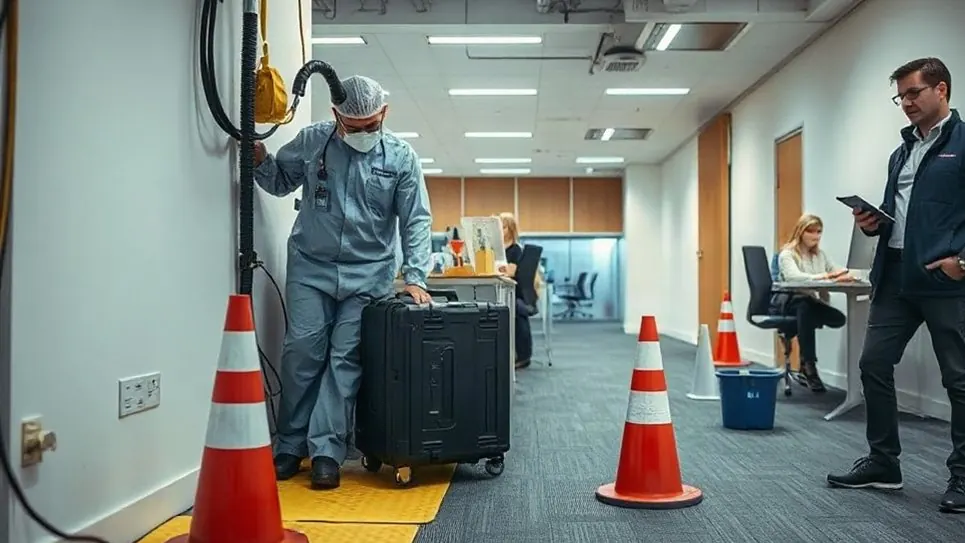
Commercial fixed wiring testing, recorded in an Electrical Installation Condition Report (EICR), identifies deterioration, defects and electrical risks in workplace installations before they pose a hazard. Our inspections assess the installation, test relevant circuits and record observations, limitations, classifications and remedial priorities, providing an auditable record for your facilities management file.
There is no statutory interval for commercial EICRs. The commonly used guidance—five years for offices, three years for industrial premises and annual checks for higher-risk environments—derives from the IET Guidance Note 3. Testing scope and recommended intervals will be tailored to your premises, electrical load, environment, plant and occupancy, and informed by previous reports.
Duty holders must maintain electrical systems so they do not create danger under the Electricity at Work Regulations 1989. In addition, insurers, landlords and licensing bodies frequently require a current EICR. We schedule testing to minimise operational impact, offer out-of-hours and weekend appointments where required, record any access constraints, and deliver clear, prioritised documentation and recommendations for remedial action.
What it costs
Clear testing records help budget remedial work and planned maintenance; we provide fixed written prices so your bill won’t exceed the quote. Below are our standard charges and what they include.
| Job | Price | What's included |
|---|---|---|
| Fault finding | £80/hr | Labour, testing, VAT |
| Emergency work | £120/hr | Out-of-hours labour; first hour minimum |
| Commercial EICR | £30–£50/circuit | Testing, report, certification |
Prices do not include plaster or decoration making good, asbestos removal, DNO supply‑upgrade charges, or scaffold and access equipment.
Portfolio and multi-site work
For multi-site portfolios we deliver reactive electrical maintenance with site-specific records, defined escalation routes and documented remedial actions to meet compliance obligations and minimise operational disruption. Each location is maintained on an asset-led log recording reported faults, engineer attendance, risk controls, test results, parts fitted and certificates issued — providing a robust, defensible audit trail and enabling responsible persons to track outstanding items through to completion.
Our portfolio audits identify recurring defects, ageing wiring, consumer unit issues and compliance gaps across your estate. Prioritisation is driven by electrical risk, statutory duties and operational impact, ensuring resources are focused where they reduce liability and business disruption most effectively. Site benchmarking highlights patterns between premises so you can target planned works where they will deliver greatest value.
We agree reporting formats, approval limits and nominated contacts in advance so responsibilities remain clear and remedial work is authorised, traceable and properly closed. Work is scheduled to minimise disruption, including out-of-hours and phased delivery where required, to maintain business continuity and meet regulatory deadlines.
Out-of-hours and minimal-disruption working
When electrical faults arise outside normal operating hours, we’ll arrange attendance through our 24-hour emergency line and apply proportionate controls to make the installation safe. We’ll assess immediate risks, isolate affected circuits where necessary and confirm whether essential services can remain operational without exposing occupants, staff or contractors to danger.
For Night shifts, we’ll agree access arrangements, work boundaries, noise limits and safe isolation procedures before attendance. Our approach is designed to protect your operations while maintaining compliance with relevant electrical safety requirements. Silent drills can help test emergency call-out routes, keyholder availability and escalation arrangements without interrupting normal trading or building use. Where planned shutdowns are needed, we’ll coordinate timing around critical activities, maintain clear segregation of work areas and guarantee temporary measures are suitable for the environment.
Documentation you receive
After reactive maintenance, we’ll provide written records that identify the fault, the affected circuits or equipment, the safety measures taken and any remedial work completed. This gives you an auditable account for your maintenance log, helping facilities teams demonstrate control of electrical risk and plan any follow-up action.
- Fault description and likely cause
- Isolation, testing and safe reinstatement details
- Circuits, equipment and locations affected
- Parts fitted and remedial work completed
- Certificate copies where testing or certification applies
We’ll record limitations, outstanding defects and recommendations clearly, so unresolved risks aren’t obscured by a temporary repair. Where work requires formal electrical certification, we’ll issue the relevant documentation promptly. Your records can then support internal compliance checks, contractor management, insurer enquiries and future maintenance decisions without relying on verbal handovers.