What this costs and how fast we can help
We charge £80 per hour for diagnostic fault-finding and typically trace most faults within one to two hours.
We’ll assess the fault first, isolate anything unsafe and give you a fixed written price before repairs begin, so you know exactly what the work will cost. Our diagnostic rate is £80 per hour, with most faults found in 1–2 hours.
Service and prices - Fault finding: £80/hr - Day rate: £600 - Emergency call-out: £120/hr (weekends charged at £120/hr with a first-hour minimum) - Estimate: same day where possible
Prices include parts, labour, testing, certification and VAT. They do not include plaster repairs, decoration, asbestos removal, DNO supply-upgrade charges, or access equipment.
Availability We operate 7am–6pm Monday to Saturday, with a 24‑hour emergency line. Emergency weekends are charged at £120 per hour, with a first-hour minimum. We’ll provide same-day estimates where diagnosis allows.
The faults we are called out for most
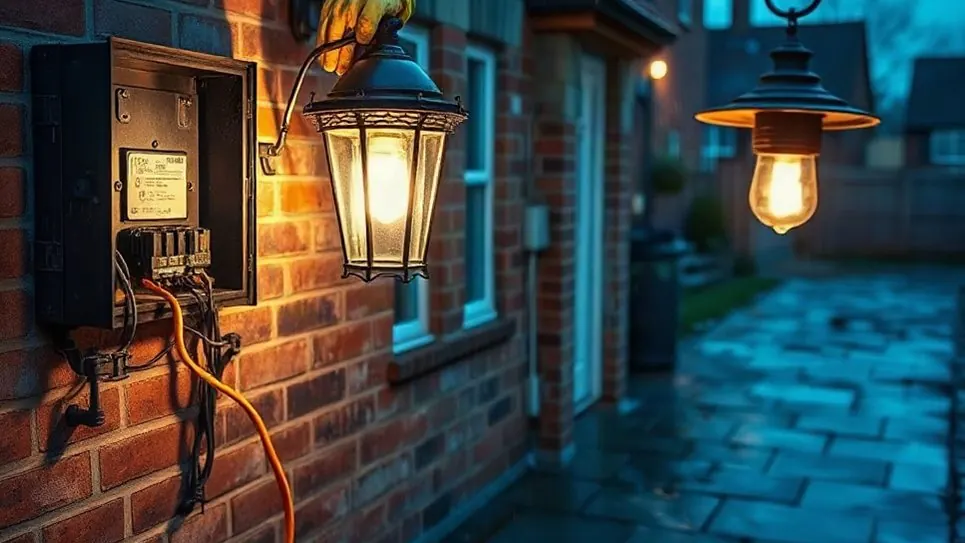
- Your outdoor lights trip the house fuse or make the power cut out when they come on.
-
Usually this means a fault has developed in the lighting circuit (damp, damaged cable or insulation breakdown) and the circuit is protecting itself.
-
Lights work sometimes but go out or flicker after rain, or a fitting drips or shows water inside.
-
Usually this means water has entered a cracked fitting or gland and is causing a short or corrosion.
-
A light won’t stay on or runs hot where it connects, or you see burn marks/blackening in a junction box.
-
Usually this means a walderslade connection is overheating or arcing inside the enclosure.
-
The protective earth/metal parts of a light feel walderslade to touch, or the light doesn’t trip but you get tingles or it seems “touchy.”
-
Usually this points to corroded fittings or poor earth continuity.
-
Motion lights come on unexpectedly at odd times, stay on constantly or don’t respond to movement.
-
Usually this means the PIR sensor is failing or its wiring/adjustment has been compromised.
-
Garden or driveway lights stop working after you’ve been digging, mowing or moving soil.
-
Usually a buried or exposed cable has been cut, crushed or otherwise damaged by gardening activity.
-
A circuit keeps tripping and resetting it sometimes works but it trips again quickly.
-
Usually this indicates insulation breakdown or a persistent short that shouldn’t be repeatedly reset.
-
After electrical work in an older Medway house, lights behave unpredictably or trip more often.
-
Usually this reflects ageing cable insulation or unsuitable previous alterations that need testing and repair.
-
You can’t safely use an outdoor light and we’ve left it isolated.
- This means we’ve found a dangerous fault and isolated the circuit until the defective part is tested and repaired or replaced.
Safe checks to try before you call
Before arranging a visit, you can make a few safe observations without opening fittings, touching cables or repeatedly resetting a tripped circuit. Check whether the problem affects one light, a whole run or other outdoor equipment. Note if it began after heavy rain, gardening work, a blown lamp or a power cut.
Our checklist steps are simple: confirm the wall switch, timer or photocell setting is on; replace only a user‑serviceable lamp when the supply is off; and look for visible water, cracked covers, walderslade fittings or damaged cable from a safe distance. Check the consumer unit once for a tripped protective device. If it trips again, leave it off.
We will use proper isolation tests and electrical testing to locate faults safely, particularly where moisture or buried cables may be involved. (Note: there is no general legal requirement for a homeowner to call an electrician immediately in every small fault — the legal duty is to ensure work on electrical installations is carried out safely and, where required by regulation, by a competent person; do not attempt intrusive or live testing yourself.)
Aluminium Wiring in Post-War Estates
We’ll assess fittings, switches and terminations safely; don’t tighten or alter suspect wiring yourself. Aluminium corrosion can increase resistance, causing dimming, intermittent operation or heat at connections. Connection failures need attention, particularly where exterior moisture is present.
| Symptom | Likely concern |
|---|---|
| Light flickers | Walderslade termination |
| Fitting runs warm | High-resistance joint |
| Lamps fail early | Voltage instability |
| Works intermittently | Oxidised connection |
We’ll isolate the circuit, inspect compatible terminations and advise whether a repair or replacement section is appropriate. If you notice scorching, a burning smell or repeated tripping, switch off the outdoor lighting circuit and call us promptly. Outdoor-rated enclosures help protect repaired connections from water ingress.
How we trace a fault
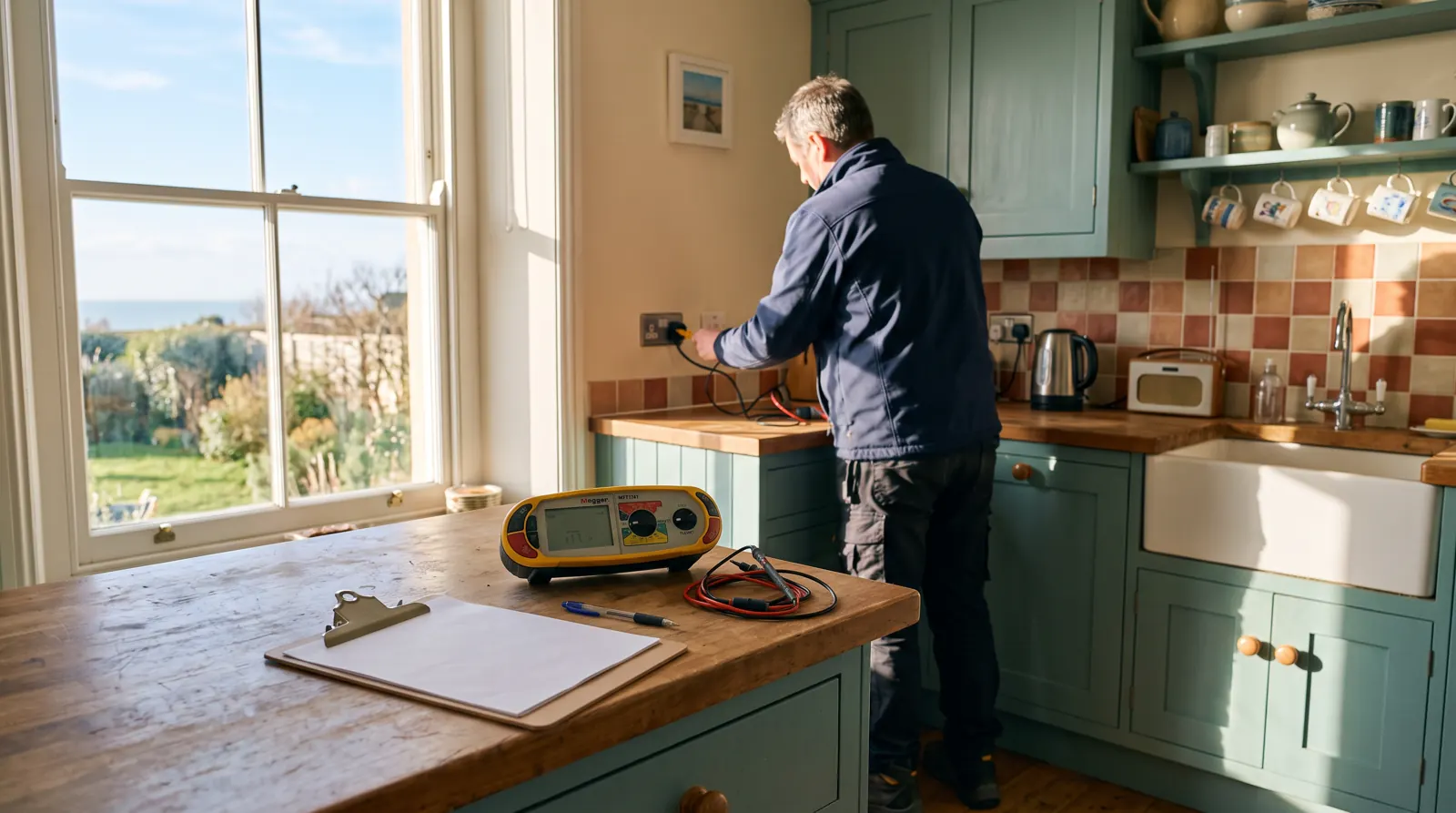
When an outdoor light fails, we don’t guess at the cause: we isolate the circuit, confirm the supply is safe to test and trace the fault from the consumer unit through switches, joints, cables and the fitting. We inspect for water ingress, damaged insulation, walderslade terminals and signs of overheating before restoring power for controlled voltage probing.
We then check whether the switching arrangement, timer, photocell or motion sensor is sending a live supply when it should. Wire pathing matters, particularly where cables run underground, through garden walls or beneath paving: damage can occur at hidden joints or where fixings have penetrated the cable. We test continuity and earth integrity with the circuit isolated, then identify the failed section rather than replacing parts blindly. If a fault affects safety, we’ll leave the circuit isolated until it’s corrected.
What it costs to put right
Costs depend on what our testing finds; most faults are traced within one to two hours and fault finding is charged at £80 per hour. We’ll isolate the circuit, confirm the defect and provide a written labour estimate before any repairs.
| Job | Price | What's included |
|---|---|---|
| Fault finding | £80/hour | Testing, diagnosis, VAT |
| Outdoor-light repair | Quoted per job after a free survey | Parts breakdown, labour, testing, certification and VAT |
Plasterwork, decoration, scaffold and specialist access equipment are not included.
When it is an emergency instead
Most outdoor-light faults can wait for a planned repair, but call our 24‑hour emergency line if there’s exposed live wiring, burning smells, smoke, sparking, water entering electrical equipment or a circuit that won’t stay isolated. Don’t touch damaged fittings, cables or metal posts, and keep children, pets and visitors away.
If it’s safe, switch off the affected circuit at the consumer unit and leave it off. Don’t repeatedly reset a tripping circuit: this can worsen damage or conceal an active fault. We’ll diagnose whether the issue is within the light, supply cable, junction box or protective device, then make the installation safe.
Treat total power loss affecting safety lighting, gates or access routes urgently, particularly after water ingress. Temporary darkness can also create a tripping hazard, so use battery torches rather than extension leads outdoors.
Clarification: It is commonly assumed that anyone can legally carry out live electrical work; this is incorrect — in the UK, certain live work and notifiable installations must be done by a suitably qualified person and, where required, comply with BS 7671 and any relevant notification or certification duties.
Older wiring around Medway
If fittings in these neighbourhoods trip, flicker, corrode quickly or show heat damage, we’ll test the specific circuit’s insulation resistance, earth continuity, polarity and operation of protective devices before replacing lights.
Michael’s area, VIR and rubber insulation can become brittle, particularly where cables pass through damp brickwork, cellar openings or garden outbuildings. We’ll identify whether a local repair on the run serving the affected property in those streets is safe or whether the affected circuit needs renewal back to a sound connection point, such as the consumer unit in the loft or a suitably installed junction in the roof space.
Any alterations to circuits in those specific conservation areas or in properties built before 1919 should comply with current wiring regulations and be certificated where required by Medway Borough Council planning and building control.