What an EV charger costs to install in Medway
From £1,000 fitted — VAT included — for a standard EV chargepoint installation in Medway (typical driveway job).
We’ll assess your consumer unit, cable route and earthing before confirming a fixed written installation cost. That starting price covers parts, labour, testing and certification and suits straightforward driveway installations across ME2, including Strood, Brompton and Luton.
Price guide - EV chargepoint: From £1,000 — parts, labour, testing, certificate, VAT - Fault finding: £80/hr — diagnosis; most faults take 1–2 hours - Consumer unit replacement: £500–£700 — parts, labour, testing, certificate, VAT
Long cable runs, difficult access, supply upgrades or remedial work can increase the scope and cost; we’ll explain any additional charges before work begins. A correctly specified chargepoint can help control running costs when paired with suitable tariffs and charging schedules. Making good, asbestos removal, DNO charges and access equipment are not included.
Grants available right now
The OZEV EV chargepoint grant is currently set at £500 per socket for eligible flat owners, renters with private off‑street parking and landlords in Medway; it is generally not available for owner‑occupied houses, so we will confirm eligibility before quoting for work.
The increased rate has applied since 1 April 2026, replacing the previous £350 per socket. Current schemes are scheduled to run until 31 March 2027 and have been described as a final year; grant rates and eligibility can change, so these should be checked each April.
Installations must be carried out by an OZEV‑authorised installer for a grant claim to be submitted on your behalf — we will engage such an installer where required. We will also assess cable routes, earthing and consumer‑unit capacity. A 7 kW chargepoint will usually require notification to UK Power Networks and, where necessary, a supply‑capacity check before installation; if a service upgrade is required this is the responsibility of the customer (or their network operator), not the grant.
Which charger suits your home
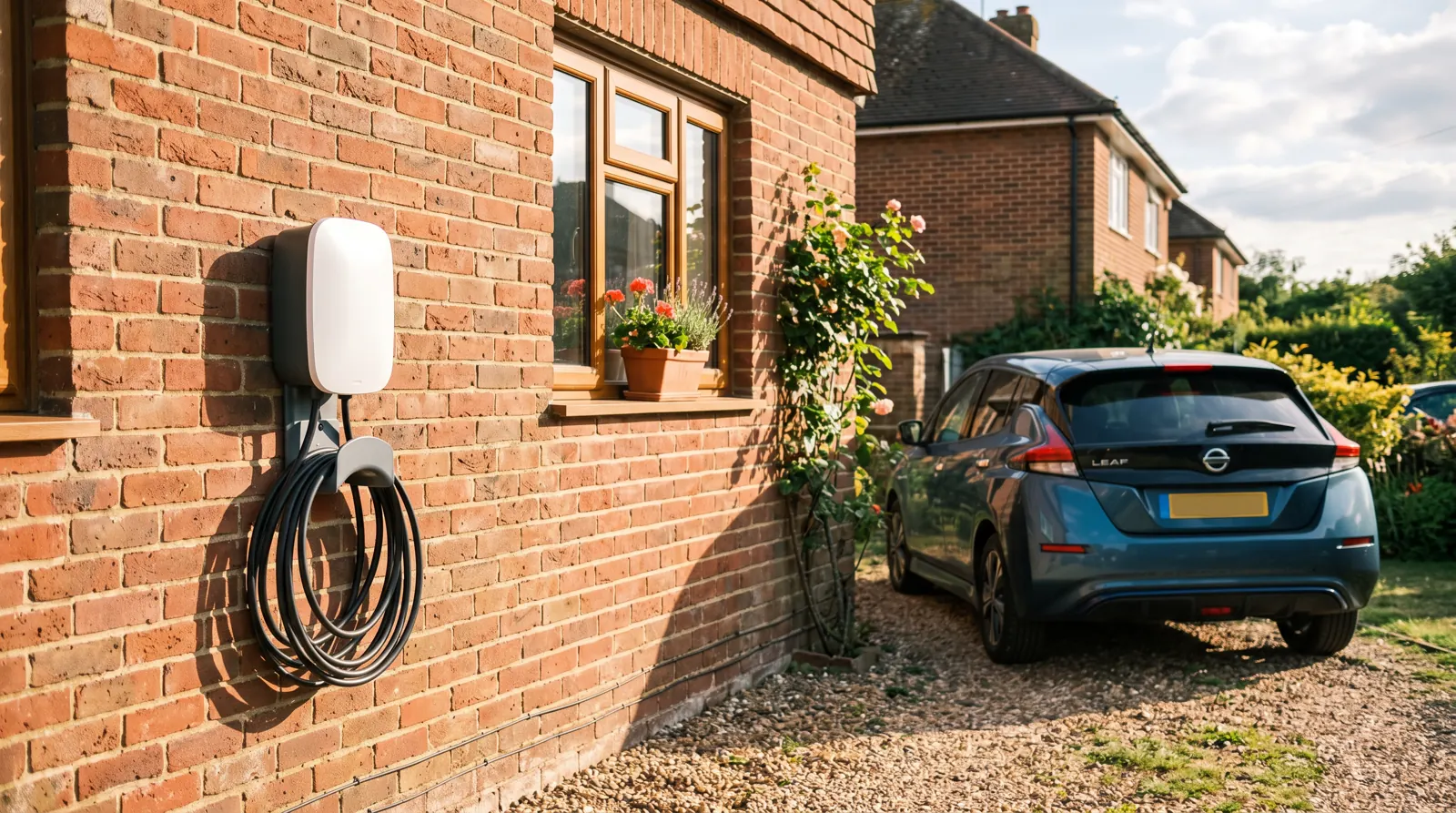
Once grant eligibility is clear, we’ll match the chargepoint to your car, parking arrangement and electrical supply. In Medway, a 7kW unit usually suits off-street homes; we’ll check consumer-unit capacity, particularly in older Brompton terraces or post-war estates.
| Home setup | Suitable charger | Cost focus |
|---|---|---|
| Driveway, daily use | Tethered Connector | Convenient cable |
| Shared parking | Untethered unit | Flexible lead |
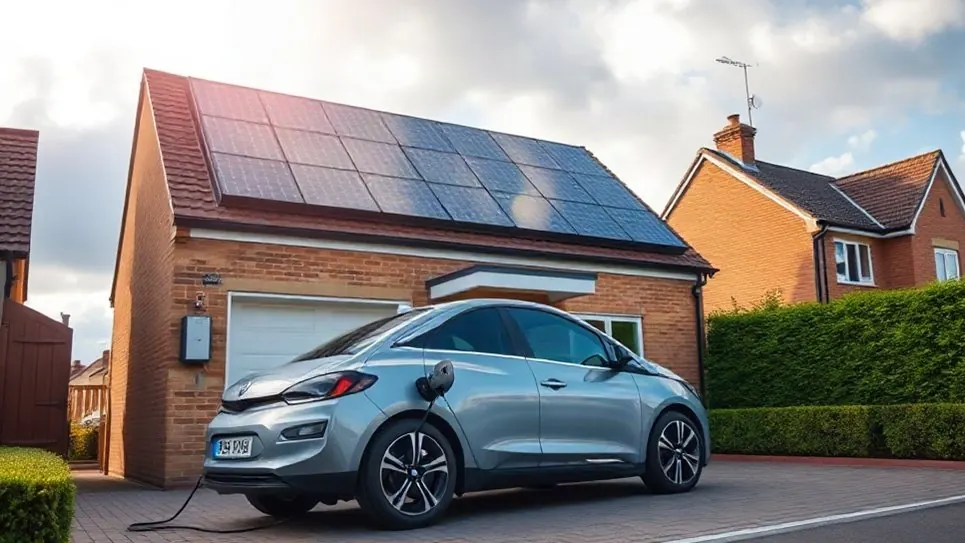
| Solar panels | Smart Loadbalance | Uses spare generation |
| Limited supply | Load-managed 7kW | Avoids upgrade |
Smart Loadbalance monitors household demand and can prioritise surplus solar rather than importing peak-rate electricity. A tethered model is practical if you want a permanently attached cable, while untethered charging can suit different vehicles. Chargepoints start from £1,000 including VAT, fitting and certification; grants may reduce eligible installations to about £500. We’ll recommend the lowest-cost compliant option.
What is involved on the day
On installation day, we’ll confirm the agreed cable route, isolate the relevant circuit and check consumer-unit capacity before fitting the chargepoint. We’ll follow the plan from your site survey, position the unit by your usual parking space and protect surfaces where drilling is needed.
Parking logistics matter in Medway’s tighter Victorian streets and shared-drive estates: we’ll need clear access for our vehicle, tools and cable runs. We’ll mount the chargepoint, install containment where appropriate, make neat external penetrations and connect solar-compatible controls if specified.
We’ll then test operation, confirm charging settings and demonstrate the app or controls. You’ll receive the electrical certificate and warranty details once work is complete. Our fixed written price covers the agreed scope, so there are no unexpected additions unless you authorise a change first.
Whether your supply can take it
Before fitting a solar EV chargepoint, we’ll assess whether your existing supply, consumer unit and earthing arrangement can safely support the added load. We check the main fuse rating, meter capacity, spare ways, cable condition and whether protective devices meet current requirements. This matters particularly in older Medway homes: Victorian properties may retain ageing wiring, while some post-war estates can have aluminium conductors needing careful inspection.
A 7kW chargepoint can be managed with load balancing, which automatically reduces charging demand when cooking, heating or showers are running. That often avoids unnecessary upgrades. If the supply is limited, we’ll explain whether a DNO-led supply upgrade is required and what it may cost before work begins. We’ll provide a fixed written price for our installation, with any network operator work clearly identified separately.
Driveways, garages and on-street parking in Medway
In Medway and Strood, Luton and Brompton we work across dense Victorian terraces in Strood, Chatham and Gillingham, dockyard-era housing, large post-war estates and new-build on the riverside and at Rochester Riverside. The recurring themes are dense rental and HMO stock across five towns, landlord EICRs and fire alarms, riverside new-build snagging and EV chargers; we explain what we find in plain English and put a fixed price in writing before any work begins.
Certificates and DNO notification
Because an EV chargepoint is a notifiable addition to your electrical installation, we’ll provide the appropriate installation certificate and notify the District Network Operator (DNO) where required. This records compliance with building regulations and confirms that circuit protection, earthing and load capacity have been checked.
For a straightforward domestic installation, DNO notification is usually handled after commissioning. Where your proposed solar generation, battery storage and chargepoint could increase export or demand beyond the network’s limits, we’ll identify whether prior approval or revised connection agreements are needed. This is particularly relevant where supplies are older, including some Medway terraces and post-war estates. We’ll explain any network-led requirements before work begins, so they can be priced within your fixed written quote rather than becoming an unexpected cost. You’ll retain certification for future records.