What this job involves and what it costs
Multi-room audio and AV wiring installs wired speaker, TV, streaming, network and control cabling from a central location, with labour at £80/hour or £600/day (VAT included) and a fixed written quote before work begins. Serving Medway and surrounding areas including nearby suburbs and villages. Work is guaranteed and carried out by certified installers with industry accreditations and compliant, tested cable terminations.
When you need it
- You notice wires and cables poking out of freshly plastered walls or under new floors when you go to fit speakers or a TV.
-
This usually means the wiring wasn’t routed or boxed-in before plastering/flooring was finished.
-
You can’t get behind a mounted TV or reach a wall for a network point because neat joinery or cupboards were fitted after cabling.
-
That usually means containment and back boxes weren’t planned before joinery was installed.
-
You’re planning an extension or open-plan layout and realise speaker positions and equipment locations don’t suit the new space.
-
That usually means speaker and network points weren’t re-assessed for the changed room layout.
-
You want ceiling speakers but aren’t sure exactly where they should go once the new décor and lighting are in place.
-
That usually means ceiling positions and TV heights weren’t confirmed before decorating finished.
-
You only install some speakers or displays now but later want to add more and discover walls must be opened to add cables.
- That usually means wiring for future zones wasn’t prepared during the renovation, making upgrades disruptive.
What it costs in Medway
We provide fixed-price quotes for audio and AV wiring in Medway after a free survey to confirm cable routes, room count, speaker/TV positions and access. Pricing covers a full installation scope so there are no surprise uplifts beyond the quoted price.
| Job | Price | What's included |
|---|---|---|
| Standard labour (hourly) | £80/hour | Labour for installations charged by the hour when applicable |
| Standard labour (daily) | £600/day | Labour for installations charged by the day when applicable |
| AV installation (fixed-price per surveyed job) | Quoted after free survey | Parts, labour, testing, certification and VAT; specification of containment, power points and testing per site assessment |
Not included: plaster making-good, decoration, asbestos removal, scaffolding and supply-upgrade charges.
What is involved on the day
On the day, we’ll confirm the cable routes and equipment positions with you, then isolate any affected circuits before work begins. We’ll install the required AV cabling, containment, wall plates and connections, keeping signal and mains cables suitably separated. We’ll then test each zone and connected circuit, and provide the relevant electrical certificate where notifiable work has been completed.
Survey and isolation
Before any multi-room audio or AV cabling is installed, we survey the Medway property, confirm equipment positions and cable routes, and check the existing consumer unit and earthing arrangements where powered equipment is planned. Our safety survey identifies concealed services, suitable containment routes, access restrictions and any fragile finishes requiring protection. We assess whether existing circuits can support the proposed loads, particularly for amplifiers, network switches, televisions and equipment racks.
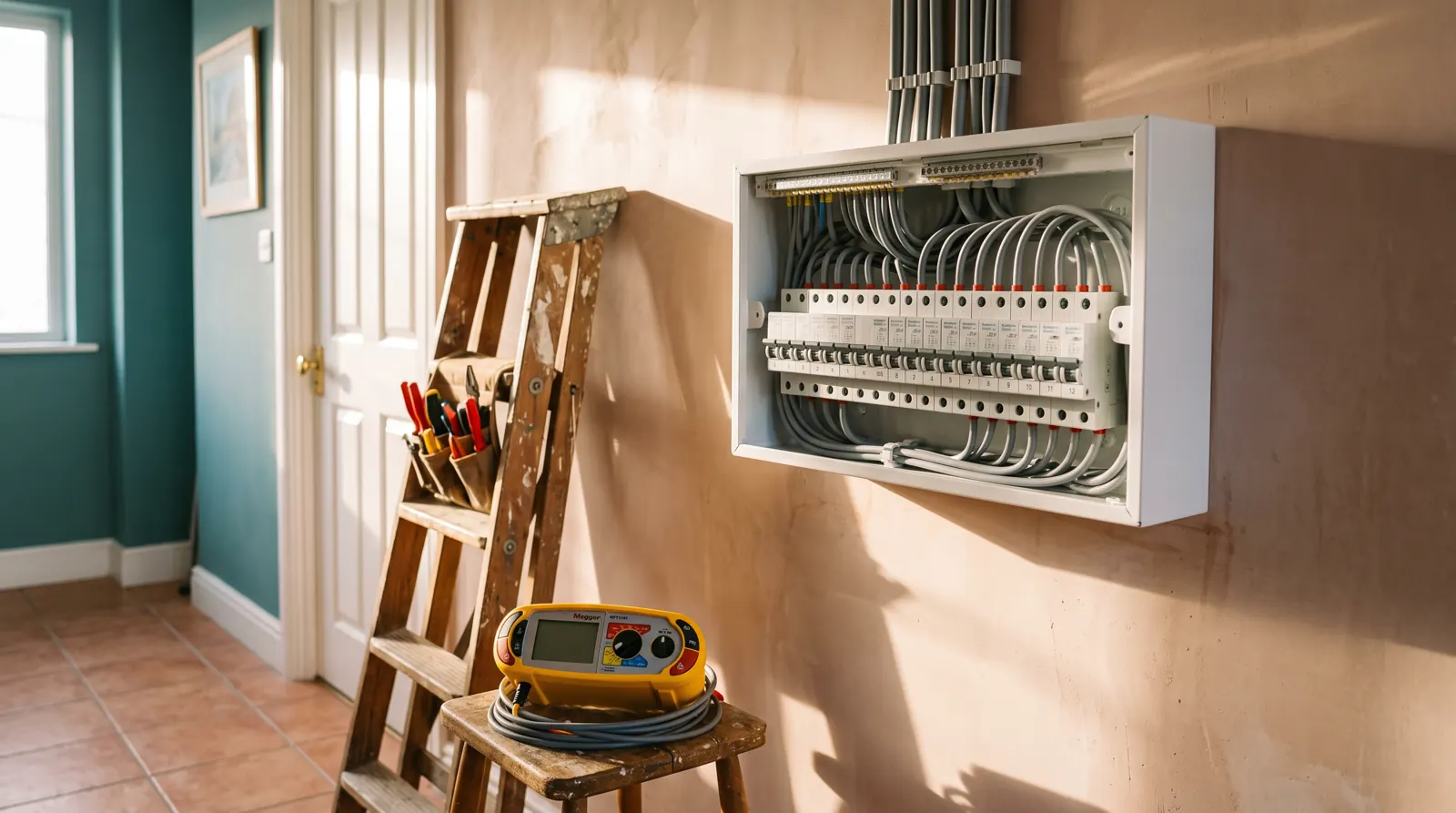
Where work could affect electrical circuits, we follow documented isolation procedures: identify the correct circuit, isolate it at the consumer unit, secure it against reconnection and prove dead with approved test equipment. We’ll also note older VIR, rubber or aluminium wiring, which may require separate attention before connections are considered. You’ll know what areas need access, what can remain live, and any limitations identified.
Installation
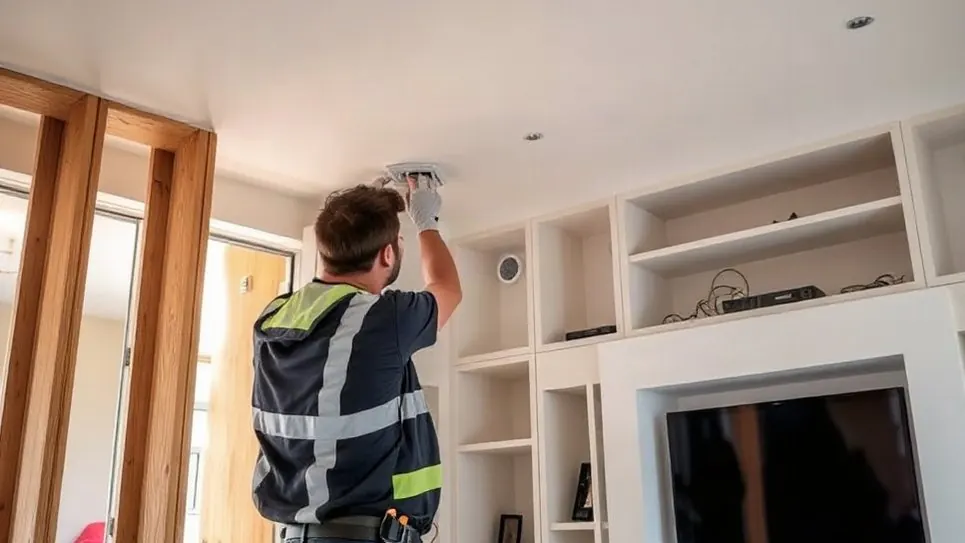
Once the agreed routes and equipment locations are confirmed, we protect work areas, isolate relevant circuits where required and install containment, back boxes and cable runs for speakers, televisions, amplifiers, network points and control equipment. We drill and chase only where approved, using suitable dust control and preserving access for future maintenance.
We position ceiling or wall speakers to the agreed speaker placement plan, allowing for joists, services, lighting and recommended clearances. Where specified, we fit acoustic treatment supports or pre-wire locations before finishes are closed. Cable management includes segregating mains and signal cabling, labelling both ends and securing runs within containment. At the equipment location, we dress cables into racks, cabinets or recessed boxes, leave service loops and prepare connections for straightforward system integration. We then reinstate access covers and leave the installation area tidy.
Testing
After installation, we test each audio, video, network and control connection systematically, confirming correct cable termination, speaker polarity, signal continuity and equipment operation. We connect source devices, displays, amplifiers and control hardware, then verify switching, volume adjustment, streaming stability and zone-by-zone playback. Signal testing checks HDMI resolution, network speed, infrared or IP commands, and any return-audio paths, ensuring equipment responds reliably from each intended control point.
We’ll check that every speaker operates cleanly without distortion, buzzing or unwanted crossover between rooms. Where the system includes surround sound or distributed audio, we set levels, delays and crossover points to suit the installed equipment and room layout. Acoustic calibration may include microphone-based measurements and practical listening checks, helping us balance output across seating areas. Finally, we demonstrate normal operation and answer your questions before we leave.
Certificate
On the day, we’ll arrive at the agreed time, confirm the room-by-room cable routes and equipment positions, then protect work areas before installation begins. We’ll install and terminate speaker, data, HDMI and control cabling, maintaining separation from mains wiring and using suitable containment where required. Before closing access points, we’ll label each cable, test continuity and signal paths, and record any changes agreed on site.
Where our work includes new electrical circuits or alterations requiring notification, we’ll complete the relevant testing and provide a safety certificate. We’ll also give you cable schedules, equipment connection notes and any manufacturer documentation needed for future servicing. After demonstrating the system, we’ll leave the areas tidy and explain the installation warranty, including the 12-month workmanship guarantee.
Options and what we recommend
For most Medway homes, we recommend a wired Cat6 backbone from a central, ventilated location to each TV point, music zone and wireless access point, with speaker cable run separately where ceiling or in-wall speakers are planned. This keeps Network cabling accessible, supports streaming reliably and allows future equipment changes without reopening walls.
| Option | Best for | Our recommendation |
|---|---|---|
| Cat6 and HDMI conduit | TVs, cinema rooms | Install both where routes permit |
| Passive speaker cable | Kitchens, lounges | Plan Speaker placement before plastering |
| Wireless-only system | Finished rooms | Use for supplementary zones |
We'd locate the hub near power, broadband entry and ventilation, not in an uninsulated loft. Use labelled cables, deep back boxes and draw wires in empty conduits. For period properties, we can use discreet routes to minimise disturbance.
Rules and certificates
Multi-room audio and AV cabling itself does not usually require notification, but related electrical work sometimes does. Work such as installing a new circuit for an AV rack, replacing a consumer unit, or carrying out electrical work in a bathroom or other special location can fall within the scope of Part P in England and may need either notification to Building Control or certification by a competent person.
We assess the supply arrangement, circuit loading, isolation and protective devices before installation so the installation is designed to meet applicable electrical safety standards. Where we install a new circuit or replace a consumer unit we issue an Electrical Installation Certificate (EIC). For additions to an existing circuit (for example a fused connection unit for equipment) we provide a Minor Electrical Installation Works Certificate where appropriate.
As NICEIC-approved and Part P-registered electricians we can, where the work is within our scope of registration and meets the required standards, complete the required notification to Building Control under the competent person scheme. If the work is not covered by a competent person scheme or performed by an unregistered installer, you may need to arrange and pay for Building Control notification and inspection yourself.
Older homes around Medway
In and around Medway we always survey each property before planning concealed audio and AV cabling. In central Medway and the nearby Brompton and Walderslade areas many homes are Victorian terraces or early 20th‑century semis (built c.1850–1930) and can contain VIR (vulcanised India rubber) or other rubber‑insulated cables, or later ad hoc alterations that affect safe cable routes.
On each Medway property we identify the construction type, accessible loft and floor voids, chimney breasts, solid walls and any existing electrical circuits before specifying speaker locations, data points, TV positions or equipment cupboards. In many of the older terraces in Brompton and central Medway we check for period wiring and approach it with particular care: we do not assume older rubber‑insulated runs can support new supplies or can share containment with low‑voltage AV cabling.
For listed buildings and sensitive Victorian properties in Medway town centre conservation areas and in historic parts of Brompton and Walderslade, we design routes to protect original plasterwork, timber joinery and late‑Victorian aesthetics. That may mean using discreet surface containment matched to the property’s finishes, or running cables via accessible floorboards or loft spaces where available. You will receive a clear proposal specific to your Medway property showing cable positions, termination points and any making‑good requirements.
How long it takes and whether you lose power
Once we’ve confirmed safe cable routes, we’ll programme the work around access, room use and any required electrical alterations. A straightforward multi-room audio installation may take one day; concealed cabling, wall-mounted displays, network switching and several zones can require two to three days. We’ll sequence first-fix cabling, termination, equipment installation and testing so rooms remain usable where possible.
A Power outage isn’t normally required for low-voltage speaker, data or HDMI cabling. However, if we’re adding fused spurs, new sockets, or altering circuits at the consumer unit, we’ll need controlled isolation. Downtime planning identifies essential loads, such as broadband routers, alarms and home-working equipment, before work begins. We’ll advise which circuits are affected, agree suitable isolation windows, test protection afterwards, and leave AV equipment labelled and operational.