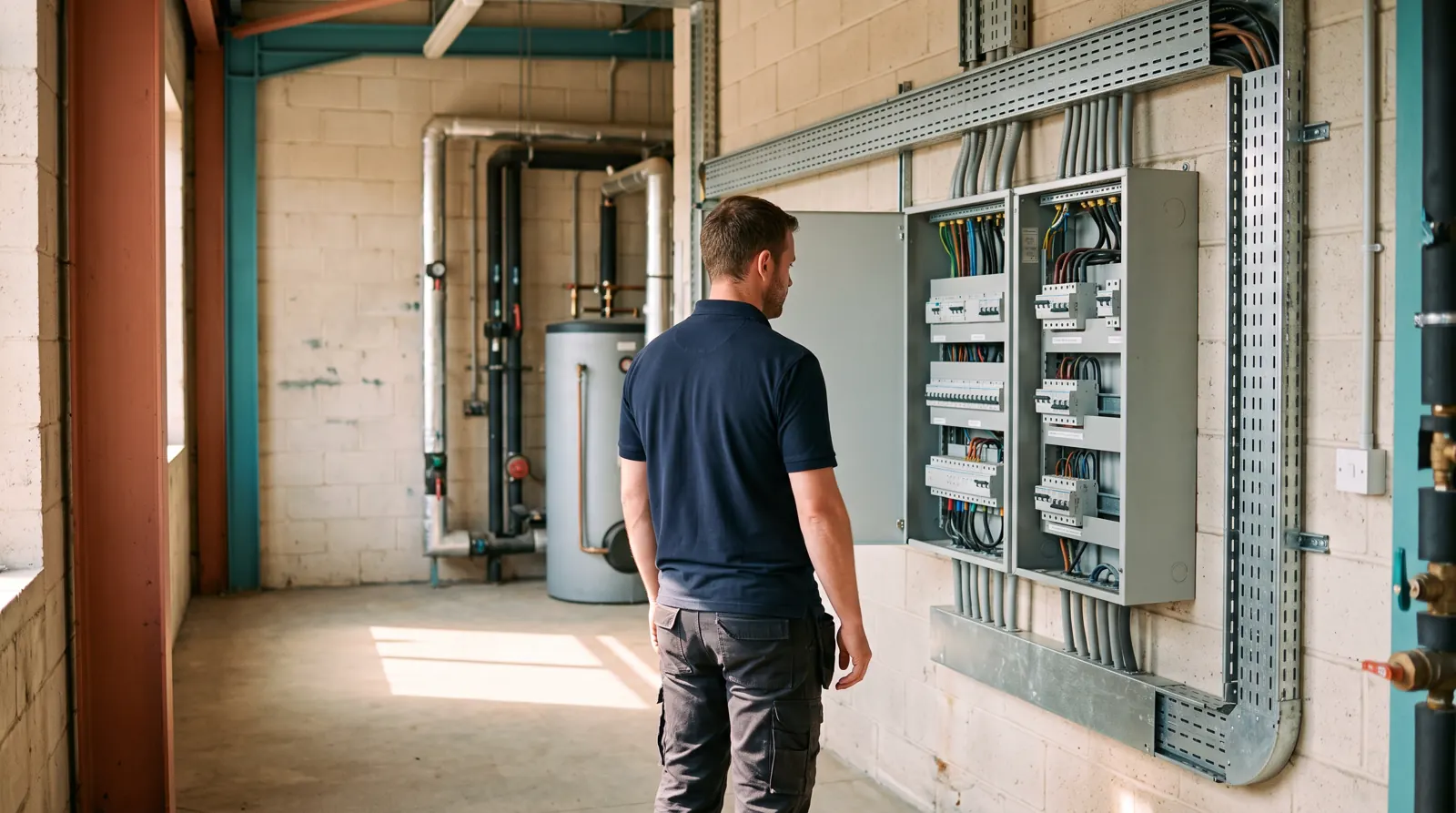

What we do and who it is for
PLC and automation electrical services from Medway Electrician at fixed, written prices. Based in Medway, serving ME2 and surrounding commercial, industrial and managed properties. Work follows applicable British Standards, site risk assessments and control documentation; all work is certified, tested, labelled and guaranteed with retained records for inspection and future maintenance.
Typical jobs
We carry out PLC and automation work across Chelmsford and the surrounding neighbourhoods of Springfield, Great Baddow and Moulsham. Typical jobs in this area include control-panel modifications for light-industrial units on the Riverside Business Park in Chelmsford, retrofitting machinery interlocks for small food-processing units in Great Baddow, and sensor and actuator wiring for workshop premises in Moulsham. In Springfield we commonly undertake pump and fan controls for Victorian and interwar brick terraced commercial conversions and for 1960s low-rise industrial units; we also perform fault-finding and planned upgrades to ageing control circuits in older estate workshop buildings near the city centre. Before work begins at any Chelmsford site we assess existing drawings, isolation arrangements and operational risks so your equipment upgrades and control retrofits are traceable and suitably managed.
- Updating relay logic or PLC inputs at small light-industrial units in the Riverside Business Park while preserving documented safety functions for those Chelmsford premises.
- Installing level, pressure, temperature or proximity sensors with labelled terminations in Great Baddow food-processing workshops and in Moulsham engineering garages.
- Adding interlocks to prevent unsafe starts, conflicting movements or dry-running pumps at older Victorian-conversion commercial properties in Springfield and around Chelmsford’s city-centre light-industrial estates.
- Investigating recurring faults at 1960s industrial units on Springfield’s outer estates, recording findings and testing operation after rectification.
Where circuits affect machinery safety in Chelmsford and its neighbourhoods we’ll identify limitations in the site-specific documentation and agree a safe scope with you. We can work around local production constraints at Riverside Business Park and other Chelmsford sites, use controlled isolation procedures appropriate to the property type (for example older terraced conversions or 1960s low-rise units), and provide amended records, test results and clear handover information tailored to each Chelmsford location.
What it costs
For PLC and automation work in Medway we provide a fixed written quote after a free survey covering agreed scope, parts, labour, testing, certification and VAT; it will not increase beyond that quote. Our documentation records exclusions, compliance evidence and commissioning responsibilities.
| Job | Price | What's included |
|---|---|---|
| Standard labour (hourly) | £80/hour | Labour for agreed scope, testing, certification, VAT |
| Day rate | £600 | Full-day labour for agreed scope, testing, certification, VAT |
| Emergency attendance | £120/hour (first hour minimum) | Emergency call-out labour and initial response, testing, certification, VAT |
| Automation installation (per job) | Quoted after free survey | Control equipment, safety requirements, integration risk assessment and required records as specified in quote (VAT included) |
Not included: plastering, decoration, asbestos removal, DNO supply-upgrade charges, scaffold and access equipment, and equipment leasing costs unless expressly stated.
How the work is planned
Before any PLC or automation work begins, we’ll survey the site, define the control scope and interfaces, and identify safety, access and operational risks. We’ll confirm which equipment must remain live, establish isolation points, and assess how proposed changes could affect plant, alarms, interlocks and manual operation.
Our risk assessment considers electrical hazards, moving machinery, network dependencies, restricted areas and any vulnerable processes. We’ll agree responsibilities with your site team, including who can authorise shutdowns, provide access and confirm safe conditions before work starts.
Scheduling coordination is central to reducing disruption. We’ll plan surveys, installation, testing and any required outages around production, occupancy and maintenance windows. Where practical, we’ll stage work to keep unaffected systems operating, use controlled changeovers, and allow time for checks before returning equipment to service.
Compliance and documentation
Once the work scope and shutdown plan are agreed, we’ll document the installation, testing and handover so you have a clear record of what’s been changed, how it’s been verified and who holds responsibility for ongoing maintenance.
We’ll provide updated drawings, PLC software backups, test results, asset references and clear version control for programmes, parameters and amendments. This supports safe fault‑finding, future alterations and traceability where several parties maintain the system.
Contrary to a common belief, there is no statutory requirement for a periodic Electrical Installation Condition Report (EICR) for commercial premises; the Electricity at Work Regulations 1989 require that electrical systems are maintained so as to prevent danger, not that a specific test report is produced at fixed intervals. Guidance such as IET Guidance Note 3 recommends inspection intervals (for example, five years for offices and three years for industrial premises) but these are guidance, not legal obligations — though insurers, landlords or licensing bodies may contractually require current reports, so keeping clear records is prudent.
Minimal disruption and out-of-hours working
We’ll plan PLC and automation work around your operational constraints, using agreed shutdown windows, phased changeovers or out-of-hours attendance where this reduces safety, production or access risk. Before attendance, we’ll agree the scope, isolation arrangements, permit requirements, access controls and handover responsibilities in writing.
Where Night shifts are appropriate, we’ll confirm supervision, welfare, lighting, emergency procedures and authorised switching personnel. We’ll maintain a clear change record, identifying software versions, parameter adjustments, test results and any temporary bypasses. Silent installations can reduce disturbance, but they still require controlled isolation, functional testing and documented acceptance before equipment returns to service.
We’ll coordinate commissioning with your responsible person, verify safeguards and alarms, and provide records for your maintenance file. Any deviations or outstanding actions will be recorded clearly, with agreed ownership and timescales.
Premises and sites around Medway
We match the control approach to each building’s use, typical occupancy and operational risk — for example, older stone and brick properties in Walderslade and Luton with timber internal partitions, interwar and post‑war suburban housing stock in Strood and Blue Bell Hill, and newer purpose‑built commercial units in the town centre.
At riverside sites along the Medway and low‑lying areas by the riverbanks, we take into account local flood exposure, the position of equipment within flood zones, the suitability of enclosures for the Medway climate and recovery procedures alongside normal electrical compliance.
This gives Medway property owners and dutyholders an auditable record of what was installed, altered, tested and placed into service for each named neighbourhood and property type.